
Can You Use Body Products on Your Face — And Vice Versa?
Face and body products aren't formulated the same way — but sometimes it's OK to break the rules. Here's when (and how) to do it.Published:
4 minute read
Ever wonder if you can use face products on your body and body products on your face? Maybe you’ve noticed that many of the formulas you use on your face contain the same key actives as the ones you use below the neck. Does that mean you can use them interchangeably?
Dermatologist Sandra Lee, MD (aka Dr. Pimple Popper) explains that the answer depends on how facial skin differs from body skin and how those formulas are designed to work. Understanding those differences can help you avoid irritation and choose the right product for each area.
Article Quick Links
The difference between face and body skin
Your face and body skin share the same basic structure, but they behave differently.
Facial skin:
- Thinner and more delicate
- Higher density of sebaceous glands that produce oil
- More reactive to irritation and clogged pores
Body skin:
- Thicker and more resilient
- Exposed to more friction from clothing and environment
These structural differences between face and body skin affect how each area responds to skincare. Facial formulas are typically balanced to minimize irritation, using carefully measured concentrations of active ingredients. Body products are often formulated to penetrate thicker skin and treat larger surface areas more effectively.
Can you use face products on your body?
In most cases, you can use face products on your body. If a formula is safe for your face, it is generally safe to use below the neck. The main difference is not safety — it’s strength.
Many common acne and tone-supporting ingredients perform the same functions wherever they’re applied. For example:
- Salicylic acid helps unclog pores
- Benzoyl peroxide targets acne-causing bacteria
- Vitamin C supports brighter-looking skin
- Glycolic acid improves texture and smoothness
These ingredients work the same way on the back or chest as they do on the face.
“As a general rule, if it’s safe for your face, it’s safe for your body,” says Dr. Lee. “The real question is whether it’s strong enough to effectively treat thicker skin on areas like the back or shoulders.” Because body skin is thicker, facial formulas may deliver more gradual results than products specifically formulated for body concerns.
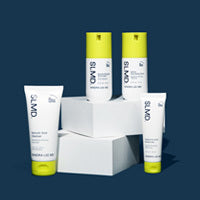
If you get the occasional body breakout, you can substitute a facial acne cleanser (like SLMD Salicylic Acid Cleanser) for your regular body wash.
Dr. Pimple Popper's Face & Body Product Picks





Face products that work well on the body
Some facial treatments can work well on body skin, especially when used on smaller areas.
- Targeted acne spot treatments can shrink pimples wherever they appear
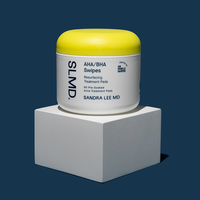
- Multi-acid formulas with AHAs and BHAs help keep pores clear and smooth rough texture
- Treatments rich in antioxidants can support clarity across larger exposed areas
If you’re already seeing good results from a facial product, there’s no harm in extending it to small body areas. Just remember that using it across larger surfaces means you’ll likely go through it more quickly.
Why you should be careful using body products on your face
Using body products on your face is more likely to cause irritation or clogged pores.
Body formulas are designed to treat thicker skin and more persistent concerns. They may contain higher concentrations of exfoliating or acne-fighting ingredients, stronger cleansing agents, or heavier emollients. On delicate facial skin, this can increase the risk of irritation, barrier disruption, or breakouts.
Patch testing can help determine tolerance before applying a body product more broadly to the face. Still, it is generally safer to stick with products labeled for facial use.
Signs that a body product may be too strong for your face include:
- Burning
- Redness
- Excess dryness
- Peeling or flaking
- Rash
- Worsening acne vulgaris
- Development of milia
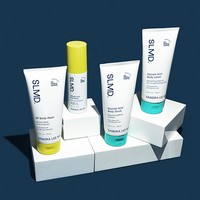
If you’re managing ongoing body breakouts or rough texture, it’s better to use formulas designed specifically for thicker skin, such as SLMD Body Acne System or Body Smoothing System.
Face vs Body Skincare FAQ
Q: Can you use body lotion on your face?
A: Body lotions are often heavier and may contain fragrance or thicker occlusive ingredients. On facial skin, this can increase the likelihood of clogged pores or irritation. In a pinch, a small amount may be tolerated, but daily facial moisturizers are typically better balanced for delicate skin.
Q: Can body wash cause breakouts on your face?
A: Some body washes contain stronger cleansing agents or higher percentages of exfoliating ingredients. When used on facial skin, they can disrupt the skin barrier and trigger irritation, which may contribute to breakouts in some people.
Q: Why are body products stronger than face products?
A: Body skin is generally thicker and less sensitive. To effectively treat concerns such as body acne or rough texture, formulas may use higher concentrations of active ingredients. Those strengths can feel too intense on facial skin.

Dr. Lee's Last Word
It’s completely fine to use face products on your body, though you may use them up more quickly. When it comes to using body products on your face, I advise caution. Facial skin is more delicate, and irritation can set you back — especially if you’re already managing acne or sensitivity.